dido:public:ra:1.2_views:1_stakeholder:6_enterprise
Differences
This shows you the differences between two versions of the page.
| Both sides previous revision Previous revision Next revision | Previous revision | ||
|
dido:public:ra:1.2_views:1_stakeholder:6_enterprise [2020/05/29 10:29] julie |
dido:public:ra:1.2_views:1_stakeholder:6_enterprise [2021/08/11 11:17] (current) murphy |
||
|---|---|---|---|
| Line 2: | Line 2: | ||
| [[dido:public:ra:1.2_views:1_stakeholder|return to Stakeholder Views ]] | [[dido:public:ra:1.2_views:1_stakeholder|return to Stakeholder Views ]] | ||
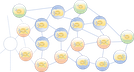
| - | **<todo @nick>Lost in first sentence. Enterprises (plural) map to Ecosphere (singular)? I don't know what that means.</todo>** | + | Referring to the figure in Section [[dido:public:ra:1.2_views:1_stakeholder]], one can observe that enterprises roughly map to an ecosphere; however, the enterprise does not necessarily control the ecosystems, platforms, or domains it now encompasses. From a DIDO perspective, all the ancillary data (i.e., external data) is accessed through the use of an //oracle//. There can be any number of oracles available to the [[dido:public:ra:xapend:xapend.a_glossary:n:node|node]] within a domain; these oracles can access data from centralized, decentralized, or other DIDOs. Some examples of oracles((This term should not be confused with the DBMS product from the Oracle Corporation; it is merely a term referring to something that is a good source of information.)): |
| - | Enterprises roughly map to an Ecosphere; however, the Enterprise does not necessarily control the Ecosystems, Platforms, or Domains it now encompasses. From a DIDO perspective all the ancillary data (i.e., external data) is accessed through the use of an //oracle//. There can be any number of oracles available to the node within a domain; these oracles can access data from centralized, decentralized, or other DIDOs. Some examples of oracles((This term should not be confused with the DBMS product from the Oracle Corporation; it is merely a term referring to something that is a good source of information.)): | + | * Another domain within the same ecosystem |
| - | + | ||
| - | * Another Domain within the same Ecosystem | + | |
| * Documents | * Documents | ||
| * Relational databases | * Relational databases | ||
| * NoSQL databases | * NoSQL databases | ||
| * Flat files | * Flat files | ||
| - | * Web Services | + | * Web services |
| - | * Application Services | + | * Application services |
| * Event logs | * Event logs | ||
| * Retail transactions | * Retail transactions | ||
| Line 24: | Line 22: | ||
| </figure> | </figure> | ||
| - | One very important aspect of an Enterprise with DIDO implementations is the heavy reliance on computer networks. These networks span all kinds of devices and operate in all kinds of environments, many of which rely on Disadvantaged Intermittent Links (DILs). Some examples are: nodes on mobile devices such as cell phones; submarines that are out of contact for long periods of time; nodes hit by natural and/or man-made disasters such as storms, earthquakes, or fire; devices that sleep to save power. | + | One very important aspect of an enterprise with DIDO implementations is the heavy reliance on computer networks. These networks span all kinds of devices and operate in all kinds of environments, many of which rely on Disadvantaged Intermittent Links (DILs). Some examples are: nodes on mobile devices such as cell phones; submarines that are out of contact for long periods of time; nodes hit by natural and/or man-made disasters such as storms, earthquakes, or fire; devices that sleep to save power. |
| + | |||
| + | /**=-=-=-=-=-=-=-=-=-=-=-=-=-=-=-=-=-=-=-=-=-=-=-=-=-=-=-=-=-=-=-=-=-=-=-=-=-=-=-=-=-=-=-=-=- | ||
| + | /* To add a discussion page to this page, comment out the line that says | ||
| + | ~~DISCUSSION:off~~ | ||
| + | */ | ||
| + | ~~DISCUSSION:on|Outstanding Issues~~ | ||
| + | ~~DISCUSSION:off~~ | ||
dido/public/ra/1.2_views/1_stakeholder/6_enterprise.1590762556.txt.gz · Last modified: 2020/05/29 10:29 by julie
