dido:public:ra:1.2_views:2_tech_views:2-nodenet:3_nodearch:3_xdata
Differences
This shows you the differences between two versions of the page.
| Both sides previous revision Previous revision Next revision | Previous revision | ||
|
dido:public:ra:1.2_views:2_tech_views:2-nodenet:3_nodearch:3_xdata [2020/05/07 18:02] nick ↷ Links adapted because of a move operation |
dido:public:ra:1.2_views:2_tech_views:2-nodenet:3_nodearch:3_xdata [2021/08/17 13:34] (current) murphy |
||
|---|---|---|---|
| Line 1: | Line 1: | ||
| - | ======= 2.3.3 Ancillary Data ======= | + | ======= 2.2.2.3.2 Ancillary Data ======= |
| - | [[dido:public:ra.1.intro:1_views:2_tech_views:2-nodenet:3_nodearch| return to Node Architecture ]] | + | [[dido:public:ra:1.2_views:2_tech_views:2-nodenet:3_nodearch| return to Node Architecture ]] |
| - | Ancillary Data is focused on data that is not directly part of the fungible data stored in the Ledger but is used in the support, care, and maintenance of the Fungible data. Ancillary Data is global in nature (all nodes need access to it) and is like the fungible data in the Ledger, distributed in nature (all nodes have copies of the data). Some DIDO implementations may provide access to Ancillary Data through the use of oracles; however, if the Ancillary Data is not also implemented as a DIDO but as frontend to centralized or even decentralized data, many of the benefits of the Distributed Data are lost. For example, if the exchange rate between currencies is not also distributed but offered from a server through an oracle, access to the exchange data becomes a vulnerability to the use of the cryptocurrency data when an exchange rate is required. | + | Ancillary ddta is focused on data that is not directly part of the [[dido:public:ra:xapend:xapend.a_glossary:f:fungible|fungible]] data stored in the [[dido:public:ra:xapend:xapend.a_glossary:l:ledger|ledger]] but is used in the support, care, and maintenance of the fungible data. Ancillary data is global in nature (all [[dido:public:ra:xapend:xapend.a_glossary:n:node|nodes]] need access to it) and is like the fungible data in the ledger, distributed in nature (all nodes have copies of the data). Some DIDO implementations may provide access to ancillary data through the use of oracles; however, if the ancillary data is not also implemented as a DIDO but as frontend to centralized or even decentralized data, many of the benefits of the distributed data are lost. For example, if the exchange rate between currencies is not also distributed but offered from a [[dido:public:ra:xapend:xapend.a_glossary:s:server|server]] through an oracle, access to the exchange data becomes a vulnerability to the use of the [[dido:public:ra:xapend:xapend.a_glossary:c:cryptocurrency|cryptocurrency]] data when an exchange rate is required. |
| - | Access to Ancillary Data depends on the source of the data. Some implementations will store all the Ancillary Data on the centralized server, others will provide access to Ancillary Data stored on a series of decentralized servers, while others will provide access to the data as fully decentralized networks (i.e., other DIDOs). Ancillary Data is accessed through an oracle. | + | Access to ancillary data depends on the source of the data. Some implementations will store all the ancillary data on the centralized server, others will provide access to ancillary data stored on a series of decentralized servers, while others will provide access to the data as fully decentralized networks (i.e., other DIDOs). Ancillary data is accessed through an oracle. |
| <figure> | <figure> | ||
| - | {{ dido:public:ra.1.intro:1_views:ledgerancillarydataoracles.png?400 |}} | + | {{ dido:public:ra:1.2_views:1_stake:ledgerancillarydataoracles.png?400 |}} |
| <caption>Relationship of Ledger, Ancillary Data and Oracles to other Network Topographies | <caption>Relationship of Ledger, Ancillary Data and Oracles to other Network Topographies | ||
| </caption> | </caption> | ||
| </figure> | </figure> | ||
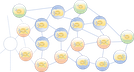
| - | The Ancillary Data, when implemented as a DIDO, is hosted in its own Network of Nodes which may or may not be the same set of Nodes as the fiduciary data. It is comprised of the Ancillary Data itself, a mechanism for transforming the data (i.e., not necessarily a Ledger Transaction), software that is distributed on all the nodes in its network called Web Applications which may or not run on a Node within the Network. | + | The ancillary data, when implemented as a DIDO, is hosted in its own network of nodes which may or may not be the same set of nodes as the fiduciary data. It is comprised of the ancillary data itself, a mechanism for transforming the data (i.e., not necessarily a ledger transaction), and software that is distributed on all the nodes in its network, called web applications, which may or not run on a node within the network. |
| <figure> | <figure> | ||
| - | {{ dido:public:ra.1.intro:1_views:nodecomponentmodel.png?400 |}} | + | {{ dido:public:ra:1.2_views:1_stake:nodecomponentmodel.png?400 |}} |
| <caption>The Components in the Ancillary Data Stack of the DIDO Node | <caption>The Components in the Ancillary Data Stack of the DIDO Node | ||
| </caption> | </caption> | ||
| </figure> | </figure> | ||
| + | |||
| + | ----- | ||
| + | * [[:dido:public:ra:1.2_views:2_tech_views:2-nodenet:3_nodearch:3_xdata:1_jrnl]] | ||
| + | * [[:dido:public:ra:1.2_views:2_tech_views:2-nodenet:3_nodearch:3_xdata:2_trans]] | ||
| + | * [[:dido:public:ra:1.2_views:2_tech_views:2-nodenet:3_nodearch:3_xdata:3_dist]] | ||
| + | * [[:dido:public:ra:1.2_views:2_tech_views:2-nodenet:3_nodearch:3_xdata:4_web]] | ||
| + | * [[:dido:public:ra:1.2_views:2_tech_views:2-nodenet:3_nodearch:3_xdata:4_xcgng]] | ||
| + | |||
| + | /**=-=-=-=-=-=-=-=-=-=-=-=-=-=-=-=-=-=-=-=-=-=-=-=-=-=-=-=-=-=-=-=-=-=-=-=-=-=-=-=-=-=-=-=-=- | ||
| + | /* To add a discussion page to this page, comment out the line that says | ||
| + | ~~DISCUSSION:off~~ | ||
| + | */ | ||
| + | ~~DISCUSSION:on|Outstanding Issues~~ | ||
| + | ~~DISCUSSION:off~~ | ||
dido/public/ra/1.2_views/2_tech_views/2-nodenet/3_nodearch/3_xdata.1588888956.txt.gz · Last modified: 2020/05/07 18:02 by nick
