dido:public:ra:1.2_views:2_tech_views:defilayers
Differences
This shows you the differences between two versions of the page.
| Next revision | Previous revision | ||
|
dido:public:ra:1.2_views:2_tech_views:defilayers [2021/05/24 18:45] nick created |
dido:public:ra:1.2_views:2_tech_views:defilayers [2022/03/15 16:21] (current) char |
||
|---|---|---|---|
| Line 1: | Line 1: | ||
| ====== 2.2.3 Decentralized Finance (DeFi) Layers ====== | ====== 2.2.3 Decentralized Finance (DeFi) Layers ====== | ||
| [[dido:public:ra:1.2_views:2_tech_views|return to Technical Views]] | [[dido:public:ra:1.2_views:2_tech_views|return to Technical Views]] | ||
| + | |||
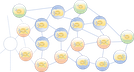
| + | The [[dido:public:ra:xapend:xapend.a_glossary:d:defi]] have defined layers 0 through 3(( | ||
| + | Rakesh Sharma, | ||
| + | Investopedia, | ||
| + | 24 March 2021, | ||
| + | __Decentralized Finance (DeFi) Definition__, | ||
| + | Accessed 24 May 2021, | ||
| + | [[https://www.investopedia.com/decentralized-finance-defi-5113835]] | ||
| + | )) | ||
| <figure DeFiLayers> | <figure DeFiLayers> | ||
| - | {{ :dido:public:ra:1.2_views:2_tech_views:screen_shot_2021-05-24_at_12.00.33_pm.png?500 |}} | + | {{ :dido:public:ra:1.2_views:2_tech_views:screen_shot_2021-05-24_at_12.00.33_pm.png?300 |}} |
| <caption>The Layers used in Decentralized Finance (DeFi).</caption> | <caption>The Layers used in Decentralized Finance (DeFi).</caption> | ||
| </figure> | </figure> | ||
| + | Sharma defines the four layers as: | ||
| + | |||
| + | * **[[dido:public:ra:xapend:xapend.a_glossary:s:settlement_layer | Settlement Layer]]** is also referred to as Layer 0 because it is the base layer upon which other DeFi transactions are built. It consists of a public [[dido:public:ra:xapend:xapend.a_glossary:b:blockchain|blockchain]] and its native digital currency or [[dido:public:ra:xapend:xapend.a_glossary:c:cryptocurrency|cryptocurrency]]. Transactions occurring on DeFi apps are settled using this currency, which may or may not be traded in public markets. One example of the settlement layer is [[dido:public:ra:xapend:xapend.a_glossary:e:ethereum|Ethereum]] and its native token [[dido:public:ra:xapend:xapend.a_glossary:e:ether|ether (ETH)]], which is traded at crypto exchanges. The settlement layer can also have tokenized versions of assets, such as the U.S. dollar, or [[dido:public:ra:xapend:xapend.a_glossary:t:tokens|tokens]] that are digital representations of real-world assets. For example, a real estate token might represent ownership of a parcel of land. | ||
| + | * **[[dido:public:ra:xapend:xapend.a_glossary:p:protocol_layer]]** are the standards and rules written to govern specific tasks or activities. In parallel with real-world institutions, this would be a set of principles and rules that all participants in a given industry have agreed to follow as a prerequisite to operating in the industry. DeFi protocols are interoperable, meaning they can be used by multiple entities at the same time to build a service or an app. The protocol layer provides [[dido:public:ra:xapend:xapend.a_glossary:l:liquidity]] to the DeFi ecosystem. One example of a DeFi protocol is Synthetix, a derivatives trading protocol on Ethereum. It is used to create synthetic versions of real-world assets. | ||
| + | * **[[dido:public:ra:xapend:xapend.a_glossary:a:applayer]]**, as the name indicates, is where consumer-facing applications reside. These applications abstract underlying protocols into simple consumer-focused services. Most common applications in the cryptocurrency ecosystem, such as decentralized cryptocurrency exchanges and lending services, reside in this layer. | ||
| + | * ** [[dido:public:ra:xapend:xapend.a_glossary:a:aggregation_layer]]**, is the aggregation layer where aggregators connect various applications from the previous layer in order to provide a service to investors. For example, they might enable the seamless transfer of money between different financial instruments to maximize returns. In a physical setup, such trading actions would entail considerable paperwork and coordination. But a technology-based framework should smooth out the investing rails, allowing traders to [[dido:public:ra:xapend:xapend.a_glossary:s:switch|switch]] between different services quickly. Lending and borrowing is an example of a service that exists in the aggregation layer. Banking services and crypto wallets are other examples. | ||
| /**=-=-=-=-=-=-=-=-=-=-=-=-=-=-=-=-=-=-=-=-=-=-=-=-=-=-=-=-=-=-=-=-=-=-=-=-=-=-=-=-=-=-=-=-=- | /**=-=-=-=-=-=-=-=-=-=-=-=-=-=-=-=-=-=-=-=-=-=-=-=-=-=-=-=-=-=-=-=-=-=-=-=-=-=-=-=-=-=-=-=-=- | ||
dido/public/ra/1.2_views/2_tech_views/defilayers.1621896325.txt.gz · Last modified: 2021/05/24 18:45 by nick
