dido:public:ra:1.2_views:3_taxonomic:1_topologies:start
Differences
This shows you the differences between two versions of the page.
| Both sides previous revision Previous revision Next revision | Previous revision | ||
|
dido:public:ra:1.2_views:3_taxonomic:1_topologies:start [2020/05/07 18:07] nick ↷ Page moved from dido:public:ra.1.intro:1_views:3_taxonomic:1_topologies to dido:public:ra.1.intro:2_views:3_taxonomic:1_topologies |
dido:public:ra:1.2_views:3_taxonomic:1_topologies:start [2022/03/15 17:30] (current) char |
||
|---|---|---|---|
| Line 1: | Line 1: | ||
| ====== 2.3.1 Network Topology Taxonomy ====== | ====== 2.3.1 Network Topology Taxonomy ====== | ||
| - | [[dido:public:ra.1.intro:1_views:3_taxonomic|return to Taxonomic Views]] | + | [[dido:public:ra:1.2_views:3_taxonomic:start|return to Taxonomic Views]] |
| - | Probably one of the most significant differences between DIDO architectures and other architectures is the simple, but powerful, topology of the network of nodes it uses to connect peers. DIDOs rely primarily on a Distributed rather than a Decentralized or Centralized topology. Each network topology defines a community of nodes that act as peers, which collectively provide a solution to a problem that is then distributed. This community of nodes also employs redundant data storage, redundant computing, or both. | + | Probably one of the most significant differences between DIDO architectures and other architectures is the simple, but powerful, topology of the network of nodes it uses to connect peers. DIDOs rely primarily on a distributed rather than a decentralized or centralized topology. Each [[dido:public:ra:xapend:xapend.a_glossary:n:nettopo|network topology]] defines a community of nodes that act as peers, which collectively provide a solution to a problem that is then distributed. This community of nodes also employs redundant data storage, redundant computing, or both. |
| - | Most DIDO implementations rely heavily on data and computational power that exists externally and, therefore, is beyond the primary focus of the DIDO. For example, an account holder in a cryptocurrency DIDO application may require information such as currency exchange rates, the holders’ nation of origin, tax ids or certificates of trust. In a greenfield development, all this external data would be held within the DIDO. The reality is that it is not possible to build everything from scratch. Therefore, this data might be held in other network topologies (see section [[dido:public:ra.1.intro:1_views:3_taxonomic:4_data_tax:2_ancillary]]). | + | Most DIDO implementations rely heavily on data and computational power that exists externally and, therefore, is beyond the primary focus of the DIDO. For example, an account holder in a [[dido:public:ra:xapend:xapend.a_glossary:c:cryptocurrency|cryptocurrency]] DIDO [[dido:public:ra:xapend:xapend.a_glossary:a:application|application]] may require information such as currency exchange rates, the holder's nation of origin, tax IDs, or certificates of trust. In a [[dido:public:ra:xapend:xapend.a_glossary:g:greenfield|greenfield]] development, all this external data would be held within the DIDO. The reality is that it is not possible to build everything from scratch. Therefore, this data might be held in other network topologies (see section [[dido:public:ra:1.2_views:3_taxonomic:4_data_tax:03_digi_taxonomy:2_ancillary]]). |
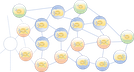
| These three kinds of network topologies are represented graphically in the following figure. | These three kinds of network topologies are represented graphically in the following figure. | ||
| Line 11: | Line 11: | ||
| {{ dido:public:ra.1.intro:kindsofnetworks.png?400 |}} | {{ dido:public:ra.1.intro:kindsofnetworks.png?400 |}} | ||
| <caption> | <caption> | ||
| - | The Difference between Centralized, Decentralized and Distributed Network Topologies | + | The Difference between Centralized, Decentralized, and Distributed Network Topologies |
| </caption> | </caption> | ||
| </figure> | </figure> | ||
| ---- | ---- | ||
| - | * [[dido:public:ra.1.intro:1_views:3_taxonomic:1_topologies:1_centralized]] | + | * [[dido:public:ra:1.2_views:3_taxonomic:1_topologies:1_centralized]] |
| - | * [[dido:public:ra.1.intro:1_views:3_taxonomic:1_topologies:2_decentralized]] | + | * [[dido:public:ra:1.2_views:3_taxonomic:1_topologies:2_decentralized]] |
| - | * [[dido:public:ra.1.intro:1_views:3_taxonomic:1_topologies:3_distributed]] | + | * [[dido:public:ra:1.2_views:3_taxonomic:1_topologies:3_distributed]] |
| + | * [[dido:public:ra:1.2_views:3_taxonomic:1_topologies:4_stds]] | ||
| + | |||
| + | /**=-=-=-=-=-=-=-=-=-=-=-=-=-=-=-=-=-=-=-=-=-=-=-=-=-=-=-=-=-=-=-=-=-=-=-=-=-=-=-=-=-=-=-=-=- | ||
| + | /* To add a discussion page to this page, comment out the line that says | ||
| + | ~~DISCUSSION:off~~ | ||
| + | */ | ||
| + | ~~DISCUSSION:on|Outstanding Issues~~ | ||
| + | ~~DISCUSSION:off~~ | ||
dido/public/ra/1.2_views/3_taxonomic/1_topologies/start.1588889278.txt.gz · Last modified: 2020/05/07 18:07 by nick
