dido:public:ra:1.2_views:3_taxonomic:4_data_tax:05_lifecycle:start
Differences
This shows you the differences between two versions of the page.
| Both sides previous revision Previous revision Next revision | Previous revision | ||
|
dido:public:ra:1.2_views:3_taxonomic:4_data_tax:05_lifecycle:start [2022/03/20 22:57] char [Overview] |
dido:public:ra:1.2_views:3_taxonomic:4_data_tax:05_lifecycle:start [2022/05/27 19:51] (current) nick grammar |
||
|---|---|---|---|
| Line 7: | Line 7: | ||
| The **Data Lifecycle** covers the stages a particular piece of data transitions through from its initial generation or capture to its eventual archival and/or deletion at the end of its useful life. [[dido:public:ra:xapend:xapend.a_glossary:d:data_management]] is the coordination and administration of all data associated with a project, program or effort. Data Management includes the metadata as well as the individual pieces of data as it progresses through the Data Lifecycle. Data management follows a [[dido:public:ra:xapend:xapend.a_glossary:d:data_strategy]], which includes the required business rules, especially those captured in any governing Legal Documents such as the Charter, By-Laws, and policy and Procedures. Figure {{ref>dataLifecycle}} reflects the major stages in the Data Lifecycle: | The **Data Lifecycle** covers the stages a particular piece of data transitions through from its initial generation or capture to its eventual archival and/or deletion at the end of its useful life. [[dido:public:ra:xapend:xapend.a_glossary:d:data_management]] is the coordination and administration of all data associated with a project, program or effort. Data Management includes the metadata as well as the individual pieces of data as it progresses through the Data Lifecycle. Data management follows a [[dido:public:ra:xapend:xapend.a_glossary:d:data_strategy]], which includes the required business rules, especially those captured in any governing Legal Documents such as the Charter, By-Laws, and policy and Procedures. Figure {{ref>dataLifecycle}} reflects the major stages in the Data Lifecycle: | ||
| - | - **Create** - The data is created, captured, copied from other sources | + | - **Create** - The data is created, captured, and copied from other sources |
| - **Store** - The data is stored into a [[dido:public:ra:xapend:xapend.a_glossary:d:datastore]] (i.e., [[dido:public:ra:xapend:xapend.a_glossary:d:database]], [[dido:public:ra:xapend:xapend.a_glossary:d:dom | Document]], Files, etc.) | - **Store** - The data is stored into a [[dido:public:ra:xapend:xapend.a_glossary:d:datastore]] (i.e., [[dido:public:ra:xapend:xapend.a_glossary:d:database]], [[dido:public:ra:xapend:xapend.a_glossary:d:dom | Document]], Files, etc.) | ||
| - **Use** - The Data is actually used, accessed and referenced by an ongoing business process. Often a [[dido:public:ra:xapend:xapend.a_glossary:d:data_management_platform]] is a non-datastore specific way to access data. | - **Use** - The Data is actually used, accessed and referenced by an ongoing business process. Often a [[dido:public:ra:xapend:xapend.a_glossary:d:data_management_platform]] is a non-datastore specific way to access data. | ||
| Line 34: | Line 34: | ||
| [[https://whatis.techtarget.com/definition/data-life-cycle]] | [[https://whatis.techtarget.com/definition/data-life-cycle]] | ||
| )) defines only six stages for the Data Lifecycle: | )) defines only six stages for the Data Lifecycle: | ||
| - | - **Generation** or **capture**: In this phase, data comes into an organization, usually through data entry, acquisition from an external source or signal reception, such as transmitted sensor data. | + | - **Generation** or **capture**: In this phase, data comes into an organization, usually through data entry, acquisition from an external source, or signal reception, such as transmitted sensor data. |
| - | - **Maintenance**: In this phase, data is processed prior to its use. The data may be subjected to processes such as integration, scrubbing and extract-transform-load (ETL). | + | - **Maintenance**: In this phase, data is processed prior to its use. The data may be subjected to processes such as integration, scrubbing, and extract-transform-load (ETL). |
| - **Active use**: In this phase, data is used to support the organization’s objectives and operations. | - **Active use**: In this phase, data is used to support the organization’s objectives and operations. | ||
| - **Publication**: In this phase, data isn’t necessarily made available to the broader public but is just sent outside the organization. Publication may or may not be part of the life cycle for a particular unit of data. | - **Publication**: In this phase, data isn’t necessarily made available to the broader public but is just sent outside the organization. Publication may or may not be part of the life cycle for a particular unit of data. | ||
| - | - **Archiving**: In this phase, data is removed from all active production environments. It is no longer processed, used or published but is stored in case it is needed again in the future. | + | - **Archiving**: In this phase, data is removed from all active production environments. It is no longer processed, used, or published but is stored in case it is needed again in the future. |
| - **Purging:** In this phase, every copy of data is deleted. Typically, this is performed on data that is already archived. | - **Purging:** In this phase, every copy of data is deleted. Typically, this is performed on data that is already archived. | ||
| - | : **Note:** These six stages are roughly the same as the ones in Figure {ref>dataLifecycle}} with slightly different names. Wigmore's model combines the **Propagation** and **Sharing** stages into a single **Publication** stage. | + | : **Note:** These six stages are roughly the same as the ones in Figure {{ref>dataLifecycle}} but with slightly different names. Wigmore's model combines the **Propagation** and **Sharing** stages into a single **Publication** stage. |
| : **Note:** It is important to have a [[dido:public:ra:xapend:xapend.a_glossary:d:data_retention_policy]] in place during all the stages of the Data Life Cycle. During **Planning**, knowing the Data Retention Policies governing the data can influence the kinds of information collected and how the data is stored. For example, partitioning the data by it's data retention policy allows data with similar governing policies to be **Archived** and **Deleted** at the same time while retaining other less sensitive data. | : **Note:** It is important to have a [[dido:public:ra:xapend:xapend.a_glossary:d:data_retention_policy]] in place during all the stages of the Data Life Cycle. During **Planning**, knowing the Data Retention Policies governing the data can influence the kinds of information collected and how the data is stored. For example, partitioning the data by it's data retention policy allows data with similar governing policies to be **Archived** and **Deleted** at the same time while retaining other less sensitive data. | ||
| Line 47: | Line 47: | ||
| [[dido:public:ra:1.2_views:3_taxonomic:4_data_tax:05_lifecycle:start| Return to Top]] | [[dido:public:ra:1.2_views:3_taxonomic:4_data_tax:05_lifecycle:start| Return to Top]] | ||
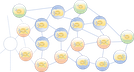
| - | The main differences betwen a generic Data Lifecycle and a DIDO Data Lifecycle is that in the idealized DIDO Data Lifecycle the **Destory** and **Archive** stages are non-existent or modified. See Figure {{ref>didoLidecycle}}. | + | The main differences betwen a generic Data Lifecycle and a DIDO Data Lifecycle is that in the idealized DIDO Data Lifecycle the **Destroy** and **Archive** stages are non-existent or modified. See Figure {{ref>didoLidecycle}}. |
| <figure didoLidecycle> | <figure didoLidecycle> | ||
| Line 54: | Line 54: | ||
| </figure> | </figure> | ||
| - | However, because the data within a DIDO is theoretically immutable and no data is ever lost, the panacea of "unlimited" data storage is being challeneged. There are different ways that the size of the ledgers can be managed. One way is to have diferent kinds of nodes with each node containing differing amounts of data. See section [[dido:public:ra:1.2_views:3_taxonomic:3_node_tax:start]]. | + | However, because the data within a DIDO is theoretically immutable and no data is ever lost, the panacea of "unlimited" data storage is being challenged. There are different ways that the size of the ledgers can be managed. One way is to have different kinds of nodes with each node containing differing amounts of data. See section [[dido:public:ra:1.2_views:3_taxonomic:3_node_tax:start]]. |
| <figure nodeTaxonomy> | <figure nodeTaxonomy> | ||
| Line 81: | Line 81: | ||
| )) | )) | ||
| - | <color blue><todo @char>New Section -- review </todo></color> | + | <color blue><todo @char #char:2022-03-20>New Section -- review </todo></color> |
| /**=-=-=-=-=-=-=-=-=-=-=-=-=-=-=-=-=-=-=-=-=-=-=-=-=-=-=-=-=-=-=-=-=-=-=-=-=-=-=-=-=-=-=-=-=- | /**=-=-=-=-=-=-=-=-=-=-=-=-=-=-=-=-=-=-=-=-=-=-=-=-=-=-=-=-=-=-=-=-=-=-=-=-=-=-=-=-=-=-=-=-=- | ||
dido/public/ra/1.2_views/3_taxonomic/4_data_tax/05_lifecycle/start.1647831420.txt.gz · Last modified: 2022/03/20 22:57 by char
