dido:public:ra:1.2_views:3_taxonomic:4_data_tax:08_objects:start
Differences
This shows you the differences between two versions of the page.
| Both sides previous revision Previous revision Next revision | Previous revision | ||
|
dido:public:ra:1.2_views:3_taxonomic:4_data_tax:08_objects:start [2021/11/04 16:43] nick [DIDO Specifics] |
dido:public:ra:1.2_views:3_taxonomic:4_data_tax:08_objects:start [2022/03/22 13:32] (current) char [Overview] |
||
|---|---|---|---|
| Line 2: | Line 2: | ||
| [[dido:public:ra:1.2_views:3_taxonomic:4_data_tax:start| Return to Data Taxonomy]] | [[dido:public:ra:1.2_views:3_taxonomic:4_data_tax:start| Return to Data Taxonomy]] | ||
| - | In programming, an [[dido:public:ra:xapend:xapend.a_glossary:o:object]] represents a real-world object such as a car, an employee or a task. Ultimately, as the real-world Object is defined in terms of software, it is translated to a [[dido:public:ra:xapend:xapend.a_glossary:d:datastructure]]. The Object Data (see Figure {{ref>ObjctDataTax}} is categorized into Characteristic Data, Definition Data, Field Data and Operation Data. | + | ===== Overview ===== |
| + | [[dido:public:ra:1.2_views:3_taxonomic:4_data_tax:08_objects:start | Return to Top]] | ||
| + | |||
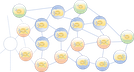
| + | In programming, an [[dido:public:ra:xapend:xapend.a_glossary:o:object]] represents a real-world object such as a car, an employee or a task. Ultimately, as the real-world Object is defined in terms of software, it is translated to a [[dido:public:ra:xapend:xapend.a_glossary:d:datastructure]]. The Object Data (see Figure {{ref>ObjctDataTax}}) is categorized into Characteristic Data, Definition Data, Field Data and Operation Data. | ||
| <figure ObjctDataTax> | <figure ObjctDataTax> | ||
| Line 10: | Line 13: | ||
| ===== DIDO Specifics ===== | ===== DIDO Specifics ===== | ||
| - | [[dido:public:ra:1.2_views:3_taxonomic:4_data_tax:07_volitility | Return to Top]] | + | [[dido:public:ra:1.2_views:3_taxonomic:4_data_tax:08_objects:start | Return to Top]] |
| - | Many [[dido:public:ra:1.2_views:1_stakeholder:1_platform | DIDO Platforms]] refer to Object Data as **[[dido:public:ra:xapend:xapend.a_glossary:s:smart_contracts | Smart Contracts]]**. These are similar too, but not the same as classes in [[dido:public:ra:xapend:xapend.a_glossary:o:oop]] languages such as C++, Java, C#, Python, etc. In many ways, the differences are lexical in nature (i.e., **''Smart Contract''** versus **''Contract''**, **''method''** versus **''function''**, etc. However, there are some important differences which have to do with the distributed nature of DIDOs and the immutability of the field data (i.e., **view** and **pure** designators on **methods**. | + | Many [[dido:public:ra:1.2_views:1_stakeholder:1_platform | DIDO Platforms]] refer to Object Data as **[[dido:public:ra:xapend:xapend.a_glossary:s:smart_contract| Smart Contracts]]**. These are similar too, but not the same as classes in [[dido:public:ra:xapend:xapend.a_glossary:o:oop]] languages such as C++, Java, C#, Python, etc. In many ways, the differences are lexical in nature (i.e., **''Smart Contract''** versus **''Contract''**, **''method''** versus **''function''**, etc. However, there are some important differences which have to do with the distributed nature of DIDOs and the immutability of the field data (i.e., **view** and **pure** designators on **methods**. |
| - | The following discussion has to do with the more generic concept of **Object Data** but does include discussions of how it relates to DIDO Platforms in general and [[dido:public:ra:xapend:xapend.b_stds:defact:ethereum:ethereum_solidity | Ethereum's Solidity]] more specifically. | + | The following discussion has to do with the more generic concept of **Object Data** but does include discussions of how it relates to DIDO Platforms in general and [[dido:public:ra:xapend:xapend.b_stds:defact:ethereum:ethereum_solidity:start| Ethereum's Solidity]] more specifically. |
| <nspages -tree -exclude -subns -pagesInNs -h1 -textNs=""> | <nspages -tree -exclude -subns -pagesInNs -h1 -textNs=""> | ||
dido/public/ra/1.2_views/3_taxonomic/4_data_tax/08_objects/start.1636058601.txt.gz · Last modified: 2021/11/04 16:43 by nick
