dido:public:ra:1.4_req:1_func:platform
Differences
This shows you the differences between two versions of the page.
| Both sides previous revision Previous revision Next revision | Previous revision | ||
|
dido:public:ra:1.4_req:1_func:platform [2021/07/26 13:04] murphy |
dido:public:ra:1.4_req:1_func:platform [2022/04/24 22:37] (current) nick |
||
|---|---|---|---|
| Line 2: | Line 2: | ||
| [[dido:public:ra:1.4_req:1_func| Return to Functional Requirements ]] | [[dido:public:ra:1.4_req:1_func| Return to Functional Requirements ]] | ||
| - | A **Platform** is an overloaded term and depends on the context it is used in. Sometimes, Platform refers to just the hardware (i.e., x86, 68000, CISC, RISC, ARM, etc.), other times it can refer to the Operating system (i.e., Windows, Linux, MacOS, Android, iOS), sometimes it can refer to the run-time environment provided by the programming languages used (i.e., C, C++, C#, Java or .NET), while othertimes it can refer to the networking used to connect computers together (i.e., [[dido:public:ra:xapend:xapend.a_glossary:t:tcp]]/[[dido:public:ra:xapend:xapend.a_glossary:i:ip]]/[[dido:public:ra:xapend:xapend.a_glossary:u:udp]], [[dido:public:ra:xapend:xapend.a_glossary:b:bluetooth]], [[dido:public:ra:xapend:xapend.a_glossary:z:zigbee]]). | + | A **Platform** is an overloaded term and depends on the context it is used in. Sometimes, [[dido:public:ra:xapend:xapend.a_glossary:p:platform|Platform]] refers to just the hardware (i.e., x86, 68000, [[dido:public:ra:xapend:xapend.a_glossary:c:cisc|CISC]], RISC, ARM, etc.), other times it can refer to the [[dido:public:ra:xapend:xapend.a_glossary:o:os|Operating system]] (i.e., Windows, Linux, MacOS, Android, iOS), sometimes it can refer to the run-time environment provided by the programming languages used (i.e., C, C++, C#, Java or .NET), while othertimes it can refer to the networking used to connect computers together (i.e., [[dido:public:ra:xapend:xapend.a_glossary:t:tcp]]/[[dido:public:ra:xapend:xapend.a_glossary:i:ip]]/[[dido:public:ra:xapend:xapend.a_glossary:u:udp]], [[dido:public:ra:xapend:xapend.a_glossary:b:bluetooth]], [[dido:public:ra:xapend:xapend.a_glossary:z:zigbee]]). |
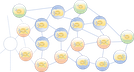
| <figure platforms> | <figure platforms> | ||
| - | {{ :dido:public:ra:1.4_req:1_func:screen_shot_2020-12-11_at_7.44.20_am.png?200 |}} | + | {{ :dido:public:ra:1.4_req:1_func:screen_shot_2020-12-11_at_7.44.20_am.png?500 |}} |
| <caption>The Kinds of Platforms</caption> | <caption>The Kinds of Platforms</caption> | ||
| </figure> | </figure> | ||
| Line 27: | Line 27: | ||
| * [[dido:public:ra:1.4_req:1_func:platform:net_arch]] | * [[dido:public:ra:1.4_req:1_func:platform:net_arch]] | ||
| - | Another way to represent a platform is to use an [[dido:public:ra:xapend:xapend.a_glossary:a:app_container]] that encapsulates the platforms into the container. This simplifies the deployment and the number of user platforms that have to be supported. For example, any user platform that can support a container, will be able to deploy and use the [[dido:public:ra:xapend:xapend.a_glossary:a:application|Application]]. | + | Another way to represent a platform is to use an [[dido:public:ra:xapend:xapend.a_glossary:a:app_container]] that encapsulates the platforms into the [[dido:public:ra:xapend:xapend.a_glossary:c:container|container]]. This simplifies the deployment and the number of user platforms that have to be supported. For example, any user platform that can support a container, will be able to deploy and use the [[dido:public:ra:xapend:xapend.a_glossary:a:application|Application]]. |
| <figure> | <figure> | ||
dido/public/ra/1.4_req/1_func/platform.1627319091.txt.gz · Last modified: 2021/07/26 13:04 by murphy
