dido:public:ra:1.4_req:1_func:platform
Differences
This shows you the differences between two versions of the page.
| Both sides previous revision Previous revision Next revision | Previous revision | ||
|
dido:public:ra:1.4_req:1_func:platform [2021/07/29 14:32] murphy |
dido:public:ra:1.4_req:1_func:platform [2022/04/24 22:37] (current) nick |
||
|---|---|---|---|
| Line 2: | Line 2: | ||
| [[dido:public:ra:1.4_req:1_func| Return to Functional Requirements ]] | [[dido:public:ra:1.4_req:1_func| Return to Functional Requirements ]] | ||
| - | A **Platform** is an overloaded term and depends on the context it is used in. Sometimes, Platform refers to just the hardware (i.e., x86, 68000, [[dido:public:ra:xapend:xapend.a_glossary:c:cisc|CISC]], RISC, ARM, etc.), other times it can refer to the Operating system (i.e., Windows, Linux, MacOS, Android, iOS), sometimes it can refer to the run-time environment provided by the programming languages used (i.e., C, C++, C#, Java or .NET), while othertimes it can refer to the networking used to connect computers together (i.e., [[dido:public:ra:xapend:xapend.a_glossary:t:tcp]]/[[dido:public:ra:xapend:xapend.a_glossary:i:ip]]/[[dido:public:ra:xapend:xapend.a_glossary:u:udp]], [[dido:public:ra:xapend:xapend.a_glossary:b:bluetooth]], [[dido:public:ra:xapend:xapend.a_glossary:z:zigbee]]). | + | A **Platform** is an overloaded term and depends on the context it is used in. Sometimes, [[dido:public:ra:xapend:xapend.a_glossary:p:platform|Platform]] refers to just the hardware (i.e., x86, 68000, [[dido:public:ra:xapend:xapend.a_glossary:c:cisc|CISC]], RISC, ARM, etc.), other times it can refer to the [[dido:public:ra:xapend:xapend.a_glossary:o:os|Operating system]] (i.e., Windows, Linux, MacOS, Android, iOS), sometimes it can refer to the run-time environment provided by the programming languages used (i.e., C, C++, C#, Java or .NET), while othertimes it can refer to the networking used to connect computers together (i.e., [[dido:public:ra:xapend:xapend.a_glossary:t:tcp]]/[[dido:public:ra:xapend:xapend.a_glossary:i:ip]]/[[dido:public:ra:xapend:xapend.a_glossary:u:udp]], [[dido:public:ra:xapend:xapend.a_glossary:b:bluetooth]], [[dido:public:ra:xapend:xapend.a_glossary:z:zigbee]]). |
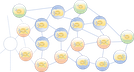
| <figure platforms> | <figure platforms> | ||
| - | {{ :dido:public:ra:1.4_req:1_func:screen_shot_2020-12-11_at_7.44.20_am.png?200 |}} | + | {{ :dido:public:ra:1.4_req:1_func:screen_shot_2020-12-11_at_7.44.20_am.png?500 |}} |
| <caption>The Kinds of Platforms</caption> | <caption>The Kinds of Platforms</caption> | ||
| </figure> | </figure> | ||
| Line 27: | Line 27: | ||
| * [[dido:public:ra:1.4_req:1_func:platform:net_arch]] | * [[dido:public:ra:1.4_req:1_func:platform:net_arch]] | ||
| - | Another way to represent a platform is to use an [[dido:public:ra:xapend:xapend.a_glossary:a:app_container]] that encapsulates the platforms into the container. This simplifies the deployment and the number of user platforms that have to be supported. For example, any user platform that can support a container, will be able to deploy and use the [[dido:public:ra:xapend:xapend.a_glossary:a:application|Application]]. | + | Another way to represent a platform is to use an [[dido:public:ra:xapend:xapend.a_glossary:a:app_container]] that encapsulates the platforms into the [[dido:public:ra:xapend:xapend.a_glossary:c:container|container]]. This simplifies the deployment and the number of user platforms that have to be supported. For example, any user platform that can support a container, will be able to deploy and use the [[dido:public:ra:xapend:xapend.a_glossary:a:application|Application]]. |
| <figure> | <figure> | ||
dido/public/ra/1.4_req/1_func/platform.1627583552.txt.gz · Last modified: 2021/07/29 14:32 by murphy
